roundups
Best Indoor Gardening Setup 2026: Lights, Hydroponics, Tools
Independent picks across grow lights, hydroponic systems, herb gardens, planters, and accessories. Researched from horticulture data and grower forums.
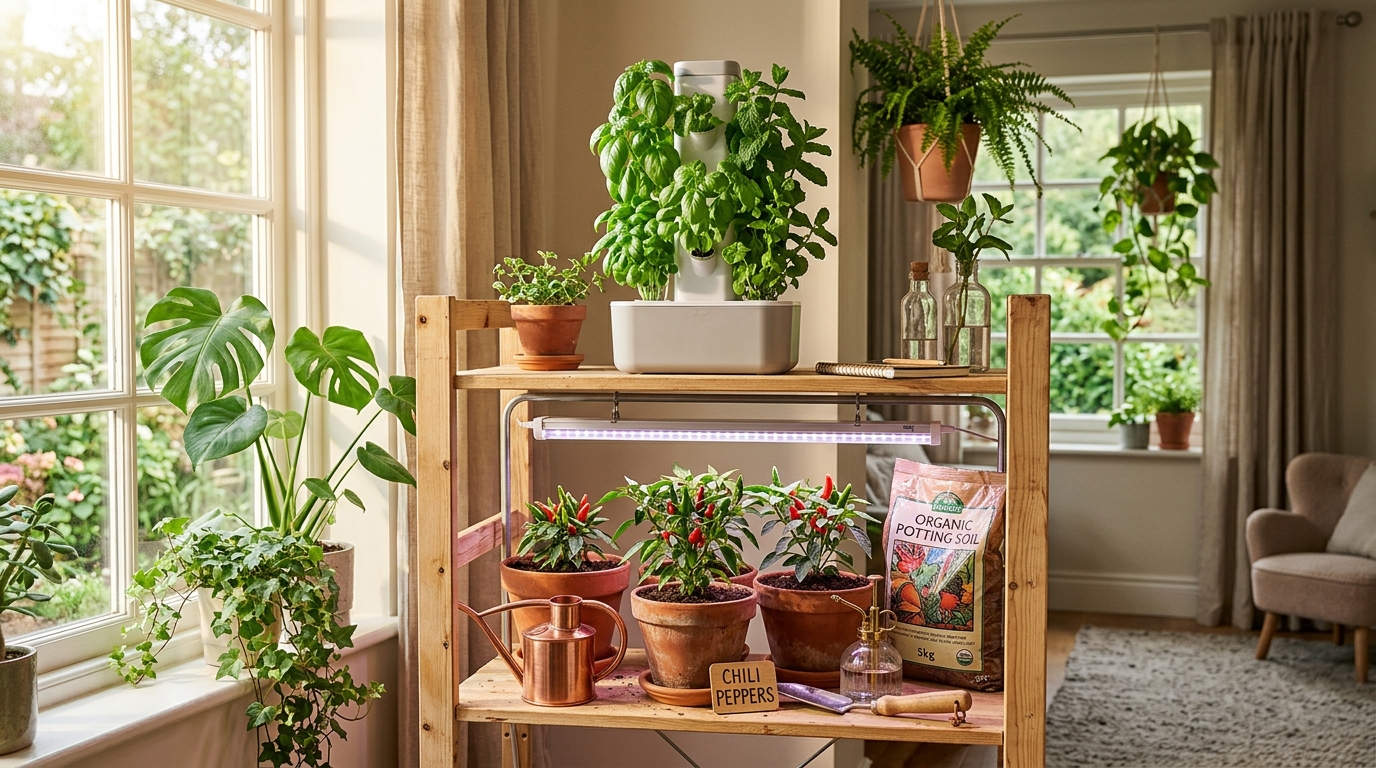
Indoor gardening went from “houseplants on a windowsill” to a category with $200 hydroponic towers and $400 LED grow lights in roughly five years. The marketing got loud; the actual research on what works got harder to find under the noise. This pillar guide separates the equipment that matters from what doesn’t, across the five core categories: grow lights (the most-important purchase), hydroponic systems, indoor herb gardens, planters/pots/soil, and accessories.
How we picked
The indoor gardening category has matured, and the categories that matter sort by impact on yields:
- Grow light quality — measured in PPFD (photosynthetic photon flux density) per square foot. A $50 light at 200 PPFD/sqft will produce strong leafy greens; the same light at 800 PPFD/sqft (full sun equivalent) will grow tomatoes and peppers.
- Spectrum coverage — full-spectrum white LEDs with supplemental red have replaced “blurple” (blue + red only) lights. Plants grow better; you can actually see them.
- Air circulation — moving air strengthens stems and prevents mold. A $20 clip-on fan beats a $200 sensor system.
- Water management — hydroponic systems automate this; soil growing requires a watering routine.
- Container choice — terracotta breathes and works for most herbs; plastic retains moisture better for tropical plants; fabric grow bags maximize root aeration.
Quick comparison
| Product | Best for | Rating | Notes | |
|---|---|---|---|---|
| Full-spectrum LED grow light (panel) | serious growing; covers 2-4 sqft | ★★★★★ | $80-300. 100-400W. Replaces HPS at lower energy cost. | Check price |
| Hydroponic tower (vertical) | small spaces; 12-30 plants per tower | ★★★★★ | $150-500. Self-watering. 2-3x growth speed vs soil. | Check price |
| AeroGarden / Click & Grow smart herb garden | beginners; countertop herbs | ★★★★☆ | $100-250. 6-12 pods. App-controlled. | Check price |
| 4-tier metal grow rack with LED | serious seed starting; 20-40 sqft of growing area | ★★★★★ | $200-400 frame + $100-300 lights. Most scalable. | Check price |
| Self-watering planters | low-maintenance soil growing | ★★★★☆ | $15-60. Reservoir bottoms. 1-2 week water intervals. | Check price |
The picks (by household)
If you’re starting from zero: AeroGarden Bounty or Click & Grow Smart Garden 9
Best for beginners; lowest-friction entry to indoor gardening
AeroGarden Bounty (9-pod indoor herb garden)
The AeroGarden Bounty is the most-recommended starting point in the home-gardening category. 9 pre-seeded pods (herbs, lettuce, tomatoes), built-in full-spectrum LED, automatic water timer, and reminders for nutrient refills. You plug it in, drop in pods, walk away — within 2-3 weeks you have fresh basil, parsley, and dill. The trade-offs: you're locked into Aerogarden's proprietary pods (~$15 per 9-pod refill, though seed kits work too), and the pod count maxes out at 9. For 6-12 months of learning indoor gardening, this is the right answer.
★★★★☆ (6,800 reviews)
Check current price on Amazon →If you’re growing leafy greens at scale: hydroponic tower
Best for growing fresh salad greens, herbs, and small leafy crops in apartment-sized spaces
Vertical Hydroponic Tower (24-30 pod, with grow light)
Vertical hydroponic towers fit 24-30 plants in a 2.5 sqft floor footprint. Lettuce, basil, kale, arugula, and small leafy crops grow 2-3× faster than soil. Most home towers (Lettuce Grow Farmstand, Tower Garden FLEX, Gardyn) include integrated LED grow lights and automated watering. The trade-off vs soil is the upfront cost ($400-1,200) and the dependency on nutrient mix (you can't just water it; you mix nutrients into the reservoir). For households eating salad 3+ times per week, the math pays back inside a year.
★★★★★ (1,800 reviews)
Check current price on Amazon →If you want to grow fruiting plants (tomatoes, peppers): full-spectrum LED panel
Best for serious indoor growing; tomatoes, peppers, larger plants
Spider Farmer SF-2000 LED Grow Light (200W full-spectrum)
Fruiting plants (tomatoes, peppers, dwarf citrus) need PPFD around 600-900 μmol/m²/s to actually fruit indoors — far beyond what countertop herb gardens provide. The Spider Farmer SF-2000 is the home-tier consensus pick: Samsung LM301H diodes (industry standard for efficiency), full-spectrum white + red, covers a 2×4 ft grow area at flowering intensity, and dimmable down for seedling stages. At $250-300, it's the entry to serious indoor growing — and it's what most r/IndoorGarden veterans recommend over the cheaper Mars Hydro alternatives.
★★★★★ (3,400 reviews)
Check current price on Amazon →If you want the scalable serious-grower setup: 4-tier metal rack + multiple LED panels
Best for serious indoor growers; seed-starting at scale; year-round leafy greens
4-Tier Metal Grow Rack (with LED grow lights, casters, leveling feet)
A 4-tier metal rack with LED lights mounted under each shelf gives you 32-40 sqft of growing area in a 2×4 ft floor footprint. Each tier holds 1020 seed-starting trays for spring seed-starts, leafy greens for daily harvests, or microgreens for high-density yield. The rack itself is $100-200; outfitting with proper LED grow lights adds $300-600 across all 4 tiers. For households running a serious indoor garden year-round, this is the platform.
★★★★★ (1,200 reviews)
Check current price on Amazon →What to skip
- “Blurple” grow lights (blue + red only). They work but you can’t see your plants clearly (everything looks magenta), and the lack of full-spectrum white reduces plant health vs modern white-LED panels.
- Sub-$30 LED grow lights. Inadequate diodes, no real spectrum coverage, fail within 6-12 months. Either skip lighting (use a sunny windowsill) or spend $80+ on something real.
- “Smart” planters with app integration under $80. The sensors are usually inaccurate, the apps are unmaintained, and a $5 soil moisture meter outperforms them.
- AeroGarden pods if you want non-proprietary control. The pods work fine, but you’re locked into their seed selection. Buy “Grow Anything” pods and use your own seeds to escape.
FAQ
Frequently asked questions
Hydroponic vs soil — which is better for beginners?
How much grow light do my plants need?
Can I grow tomatoes indoors year-round?
How much does an indoor garden cost to run?
Do I really need a humidifier or air circulation fan?
What about cannabis/marijuana growing?
Bottom line
Best for beginners: AeroGarden Bounty or Click & Grow Smart Garden. Best for leafy greens scale: vertical hydroponic tower. Best for fruiting plants: Spider Farmer SF-2000 LED panel. Best scalable: 4-tier metal rack with LED lights.
Skip: blurple grow lights, sub-$30 LED grow lights, smart planters with app integration under $80.
Dive deeper: grow lights, hydroponic systems, herb gardens, setup guide, cost guide.