roundups
Best LED Grow Lights 2026 (For Indoor Plants & Vegetables)
Independent LED grow light picks: Mars Hydro, Spider Farmer, Soltech, AC Infinity. Full-spectrum white, PPFD coverage, dimmable controls compared.
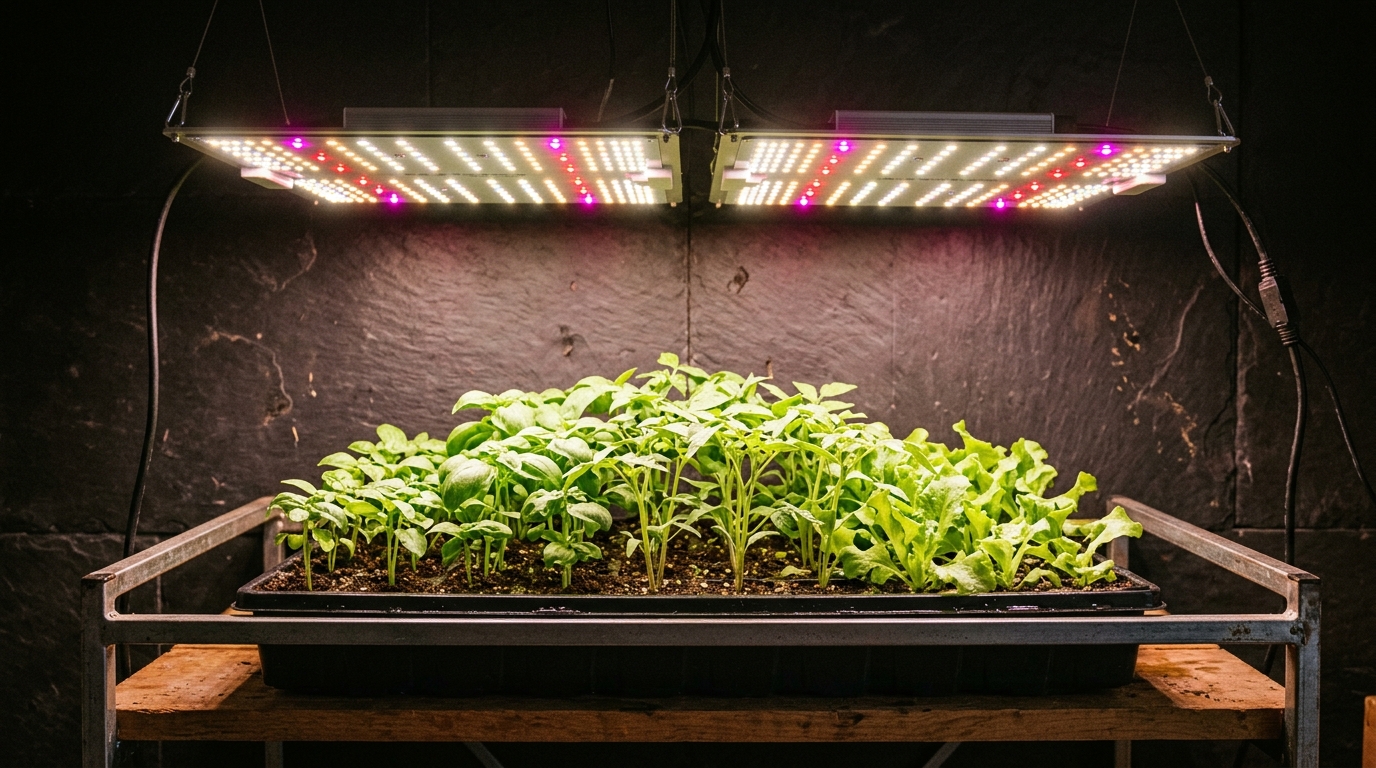
LED grow lights have replaced fluorescent T5s and high-pressure sodium (HPS) as the standard for indoor growing. The technology genuinely improved: better spectrum, less heat, longer lifespan, lower energy consumption. The category fragmented along the way — premium brands like Spider Farmer and AC Infinity sit alongside hundreds of Amazon no-names, and the difference between them shows up in PPFD readings, diode quality, and 3-year reliability. This guide separates the legitimate brands from the marketing.
How LED grow lights actually differ
Three meaningful axes:
- Diode quality. Samsung LM301H (and LM301B) diodes are the home-tier standard for efficiency and lifespan. Cheap LEDs use unbranded chips that degrade 30-40% within 12 months. Quality LEDs hold 90%+ of original output past year 5.
- Spectrum. Modern lights use full-spectrum white (3000-3500K mix) plus supplemental red (660nm) and sometimes UV/far-red. Older “blurple” panels (blue + red only) work for vegetative growth but produce harsh purple lighting that makes plants hard to inspect.
- PPE (photosynthetic photon efficacy) — measured in μmol/J. Quality home LEDs run 2.6-2.9 μmol/J; commercial-grade hits 3.0+; cheap LEDs are 1.5-2.0. Higher PPE = more photons per watt = lower electricity cost for the same growth.
Quick comparison by use case
| Product | Best for | Rating | Notes | |
|---|---|---|---|---|
| Soltech Aspect / Soltech Helios | design-focused; looks like a normal pendant light | ★★★★★ | $130-280. Full-spectrum. Aesthetic forward. | Check price |
| Spider Farmer SF-1000 | entry serious-growing for 2x2 ft area | ★★★★★ | $120-150. 100W. Samsung LM301B. Dimmable. | Check price |
| Spider Farmer SF-2000 | best balance for 2x4 ft grow area | ★★★★★ | $220-280. 200W. Samsung LM301H. Dimmable. | Check price |
| Mars Hydro TS 1000 | budget entry to LED panels | ★★★★☆ | $90-130. 150W rated. Adequate for small spaces. | Check price |
| AC Infinity IONFRAME EVO4 | premium build; smart controller integration | ★★★★★ | $350-450. 300W. UIS integration with AC fans. | Check price |
| GE Grow Light bulbs (BR30) | individual plants in existing fixtures | ★★★★☆ | $15-25. Screws into standard sockets. Lower output. | Check price |
| T5 Fluorescent strip (legacy) | seed starting only; not recommended for new builds | ★★★★☆ | $60-120. Outdated tech; LED has surpassed it. | Check price |
The picks
Best overall: Spider Farmer SF-2000
Best for the consensus best home LED grow light; suits everything from seedlings to flowering tomatoes
Spider Farmer SF-2000 LED Grow Light (200W full-spectrum)
The Spider Farmer SF-2000 is the most-recommended LED grow light in home gardening communities. Samsung LM301H diodes (industry standard for efficiency at the home tier), genuine full-spectrum with supplemental red, dimmable driver lets you use it for seedlings (low intensity) through flowering (max intensity), and covers a 2×4 ft growing area at flowering intensity. 200W actual draw produces light comparable to 400W HPS at half the energy cost and a fraction of the heat.
★★★★★ (3,400 reviews)
Check current price on Amazon →Pros
- Samsung LM301H diodes — current home-tier quality standard
- Genuinely full-spectrum (white + red); plants look normal under it
- Dimmable 0-100% — same light works for seedlings AND flowering
- 2x4 ft coverage at flowering intensity (or 3x4 ft for vegetative)
- PPE around 2.75 μmol/J — competitive with brands 2x the price
- 5-year warranty, replaceable driver
Cons
- Not aesthetic — looks like a grow light, not a pendant
- Heavier than budget panels (12 lbs); plan your hanging hardware
- Fanless design is silent but requires headroom for heat dissipation
- Driver hangs separately from the light (some prefer integrated)
Best entry tier: Spider Farmer SF-1000 or Mars Hydro TS 1000
Best for 2×2 ft grow space; one shelf of a grow rack; small countertop garden
Spider Farmer SF-1000 (100W full-spectrum)
The SF-1000 is the right entry point if your growing area is small. Samsung LM301B diodes (slightly less efficient than the LM301H in the SF-2000, but still solid), 100W actual draw, covers a 2×2 ft area at flowering intensity. Dimmable, full-spectrum, same warranty as the larger model. At \$120-150 it's significantly cheaper than the SF-2000 — appropriate if you have one shelf to light, not a 2×4 grow space.
★★★★★ (2,100 reviews)
Check current price on Amazon →Best for aesthetics: Soltech Aspect
Best for users who want a grow light that looks like a normal pendant lamp
Soltech Aspect Grow Light (pendant style)
Soltech makes the rare grow light that won't make your living room look like a basement growroom. The Aspect is a pendant-style fixture with full-spectrum white light — visually indistinguishable from a designer lamp. PPFD is lower than dedicated panels (suitable for ornamental houseplants and herbs, not for high-output fruiting), but for users who want to keep aesthetics intact while supporting indoor plants, this is the right pick.
★★★★★ (1,800 reviews)
Check current price on Amazon →Best premium: AC Infinity IONFRAME EVO4
Best for serious home growers; integrates with AC Infinity smart fan controllers
AC Infinity IONFRAME EVO4 LED Grow Light (300W)
The IONFRAME EVO4 is the premium home LED with smart integration. 300W full-spectrum with Samsung LM301H + Osram red diodes, smart controller compatibility with AC Infinity's UIS ecosystem (the same controllers run their PRO-grade fans, so one app monitors lights and ventilation together), and a built-in driver for clean installation. At $350-450 it's the upgrade tier — worth it if you're building a serious indoor grow room and want unified smart control.
★★★★★ (680 reviews)
Check current price on Amazon →Best budget: Mars Hydro TS 1000
Best for absolute budget tier; cheapest legitimate LED grow light
Mars Hydro TS 1000 LED Grow Light
Mars Hydro is the legitimate budget brand in LED grow lights. The TS 1000 isn't as efficient as the Spider Farmer line (different diode mix, lower PPE), but it works — produces enough PPFD for vegetative growth in a 2×2 ft area, and the build quality holds up for 2-4 years at the home-use intensity. At $90-130 it's the cheapest LED panel we'd actually recommend; below this tier, the lights are not worth the electricity.
★★★★☆ (5,800 reviews)
Check current price on Amazon →What to avoid
- Sub-$30 LED grow lights. No real spectrum coverage, unbranded diodes, 6-12 month lifespan. Use a sunny window instead.
- “Blurple” grow lights (blue + red only, no white). They work, but plants look magenta and you can’t visually inspect for health issues. Modern white-LED panels supplemented with red have replaced this format.
- Grow lights with wattage claims significantly higher than rated draw. A light marketed as “1000W LED grow light” that draws 100W from the wall is using nominal LED wattage (the rated capacity of all chips combined, not actual power consumption). This is the most common misleading spec in the category.
- High-pressure sodium (HPS) lamps for home use. They work but run hot (60-100°F+ in the grow area), use 2× the energy of equivalent LEDs, and require ballast replacement. The LED category has surpassed HPS for home growing.
FAQ
Frequently asked questions
What does PPFD mean and why does it matter?
How many hours should I run my grow light?
Spider Farmer vs Mars Hydro vs AC Infinity?
Do I need to run my grow light 24/7?
How long do LED grow lights last?
Can I just use a sunny window?
Bottom line
Best overall: Spider Farmer SF-2000. Best entry: SF-1000 or Mars Hydro TS 1000. Best aesthetic: Soltech Aspect. Best premium: AC Infinity IONFRAME EVO4.
Skip sub-$30 LEDs, blurple (blue+red only) lights, and any panel claiming 1000W+ rated power but drawing 100W at the wall.
Pair the right grow light with hydroponic systems, herb gardens, or the pillar setup overview.