roundups
Best Hydroponic Systems 2026 (Tower, NFT, DWC for Home)
Hydroponic system picks: vertical towers, NFT channels, DWC bubbleers, Kratky jars. Researched from system designs and grower forums.
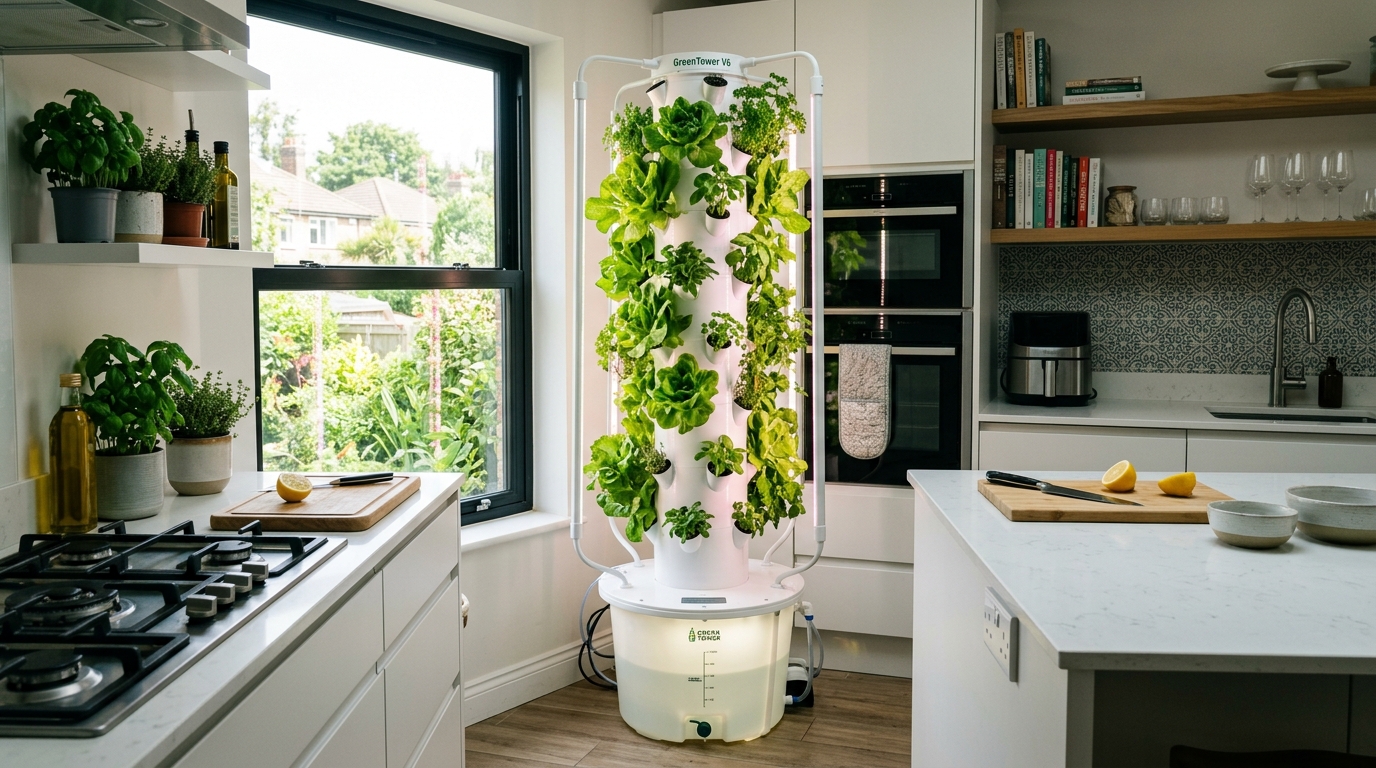
Hydroponics produces 2-3× faster growth than soil at the cost of upfront equipment investment and ongoing nutrient management. The home hydroponic category has matured into four distinct system types — vertical towers, NFT (nutrient film technique) channels, DWC (deep water culture) bubbleers, and Kratky-style passive systems — each with genuine use cases. This guide separates them and surfaces the picks within each.
How hydroponic systems differ
Four main approaches:
- Vertical tower: PVC or HDPE cylinder with planting holes spiraling around it. Water pumped to the top trickles down through roots. Fits 12-30 plants in 2-3 sqft of floor space.
- NFT (Nutrient Film Technique): Plants sit in horizontal channels (often PVC pipes with cutouts), nutrient solution flows continuously underneath their roots. Commercial standard for leafy greens; can scale to dozens of feet of channels.
- DWC (Deep Water Culture): Plant net cups suspended over a reservoir; air pump creates bubbles that oxygenate the nutrient water. Roots grow directly into the water. Simple, productive, can be a single 5-gallon bucket.
- Kratky (passive DWC): Plants in a jar of nutrient water with an air gap above the water line. Roots split between water (for nutrients) and air (for oxygen). Zero electricity, zero pumps. Great for lettuce; limited for fruiting plants.
Smart pre-packaged systems (AeroGarden, Click & Grow) are simplified DWC variants with proprietary pods.
Quick comparison
| Product | Best for | Rating | Notes | |
|---|---|---|---|---|
| Lettuce Grow Farmstand (vertical tower) | best premium vertical tower | ★★★★★ | $400-1,200. 12-30 plants. Self-watering. App. | Check price |
| Gardyn Home Kit (smart vertical) | beginners; AI-assisted growing | ★★★★★ | $700-900. 30 pods. Cameras, hover-arm watering. | Check price |
| IDOO 12-pod countertop hydroponic | budget alternative to AeroGarden | ★★★★☆ | $100-180. 12 plant pods. Built-in LED. | Check price |
| Active Aqua Hydroponic NFT Kit | NFT for serious leafy-green production | ★★★★★ | $200-450 for 4-12 channel kit. Scalable. | Check price |
| DWC 5-gallon bucket kit | DIY simplicity; one plant per bucket | ★★★★★ | $40-80 per bucket. Air pump + airstone + net cup. | Check price |
| Kratky mason jar setup | zero electricity; passive lettuce growing | ★★★★☆ | $20-40 for jars + net cups + nutrients. No pump. | Check price |
The picks
Best premium vertical: Lettuce Grow Farmstand
Best for households eating salads 3+ times per week; the most-recommended home tower
Lettuce Grow Farmstand (12-30 plant vertical hydroponic tower)
The Farmstand is the consensus premium vertical hydroponic tower. The 12-plant base model runs \$400-600; expanding to 30 plants is a few hundred more. Self-watering on a 24-hour cycle, integrated grow lights (optional add-on), and a stable HDPE construction that genuinely lasts a decade. The math: a household eating a salad 3-4 times per week from their Farmstand replaces roughly \$30-50/month in grocery greens, paying back the tower in 12-18 months.
★★★★★ (1,400 reviews)
Check current price on Amazon →Best NFT for scale: Active Aqua kit
Best for users running serious leafy-green production; 30-100+ plants per kit
Active Aqua NFT Hydroponic Kit (4-12 channel)
NFT (Nutrient Film Technique) channels are the commercial standard for leafy greens. The Active Aqua kits scale from 4-channel countertop ($200-300) to 12-channel grow-rack ($350-500). A continuous thin film of nutrient solution flows under the plant roots; growth rates are the fastest of any hydroponic system. The trade-off: requires more setup expertise than DWC and a reliable pump (failure = roots dry within hours).
★★★★★ (620 reviews)
Check current price on Amazon →Best DWC: 5-gallon bucket kit
Best for serious single-plant growing; tomatoes, peppers, large herbs
DWC 5-Gallon Bucket Hydroponic Kit (air pump + airstone + net cup)
DWC is the simplest serious hydroponic system. A 5-gallon bucket holds the nutrient reservoir; an air pump and airstone keep the roots oxygenated; a single plant grows in a net cup at the top. One bucket produces one massive plant: a single DWC tomato can yield 15-30 lbs in a season. Scale by adding more buckets — 4 buckets in a row produces a serious indoor garden. Total cost per bucket: \$40-80.
★★★★★ (1,800 reviews)
Check current price on Amazon →Best zero-electricity: Kratky mason jar setup
Best for growing 1-4 heads of lettuce passively, with zero electricity needed
Kratky Hydroponic Mason Jar Kit (no pump, no electricity)
The Kratky method skips the pump entirely. A mason jar holds nutrient water; a net cup with a lettuce or herb seedling sits in the top; the seedling's roots split between the water (nutrients) and the air gap above (oxygen). No air pump, no water pump, no electricity. For lettuce specifically, Kratky produces full heads in 4-6 weeks from a setup costing \$20-40. The trade-off: limited to lettuce and small leafy plants; fruiting plants exhaust the reservoir.
★★★★☆ (1,200 reviews)
Check current price on Amazon →Best beginner smart system: Gardyn Home Kit
Best for users who want a vertical tower with AI-assisted growing and minimal hands-on management
Gardyn Home Kit (smart vertical hydroponic with AI)
The Gardyn combines a vertical hydroponic tower with cameras and an AI assistant called Kelby that monitors plants and suggests interventions. 30 plant pods, integrated LED lights, hover-arm watering, and an app that tells you when to add nutrients. At \$700-900 it's premium-tier pricing; for users who want hydroponic results with software-managed growing experience, it's the most-recommended option in the category.
★★★★★ (900 reviews)
Check current price on Amazon →Nutrient and pH basics
All non-proprietary hydroponic systems require you to mix nutrients into water. Three things matter:
- Nutrient solution. General Hydroponics Flora Series (3-part) is the most-documented home nutrient. Masterblend 4-18-38 is the budget alternative used by serious growers. Don’t mix nutrients meant for soil — they won’t dissolve correctly.
- pH. Hydroponic plants want water pH 5.5-6.5. Tap water often runs 7.0-8.0. Use a pH meter ($15-50) and pH Down (phosphoric acid) to adjust. Skipping this is the #1 cause of “my hydroponic plants aren’t growing” complaints.
- EC (electrical conductivity). Measures total dissolved solids — your nutrient concentration. Light feed: 0.8-1.2 EC. Standard: 1.5-2.0 EC. Heavy: 2.0-2.5 EC. Cheap EC meters at $15-30 are good enough for home use.
What to avoid
- Sub-$80 “hydroponic kits” without integrated lights. They’re net cups and a small pump in a plastic tub. The cost of adding proper lights and a real reservoir will exceed a quality starter kit.
- “All-in-one” smart gardens that don’t allow non-proprietary seeds. AeroGarden technically does (Grow Anything pods), but cheaper imitators lock you into branded pods.
- Hydroponic kits with included nutrient solution that’s not branded. General Hydroponics, Masterblend, FoxFarm, and Botanicare are real brands. Generic “hydroponic nutrient” packets are usually fertilizer ratios meant for soil watering, not hydroponics.
FAQ
Frequently asked questions
Hydroponic vs soil — what's the actual difference?
How often do I change the nutrient water?
How much does hydroponic gardening cost to run?
Can I grow tomatoes hydroponically indoors?
NFT vs DWC vs tower — which is right for me?
Do I need a water chiller?
Bottom line
Best premium vertical: Lettuce Grow Farmstand. Best NFT: Active Aqua kit. Best DWC: 5-gallon bucket setup. Best zero-electricity: Kratky mason jar. Best smart beginner: Gardyn Home Kit.
Pair with proper grow lights and read the setup guide for nutrient and pH workflow.