guides
Indoor Gardening Setup Guide: Lights, Soil, Water, pH
Step-by-step indoor gardening setup: choosing a location, picking lights, soil vs hydroponic, watering, pH and nutrients, troubleshooting.
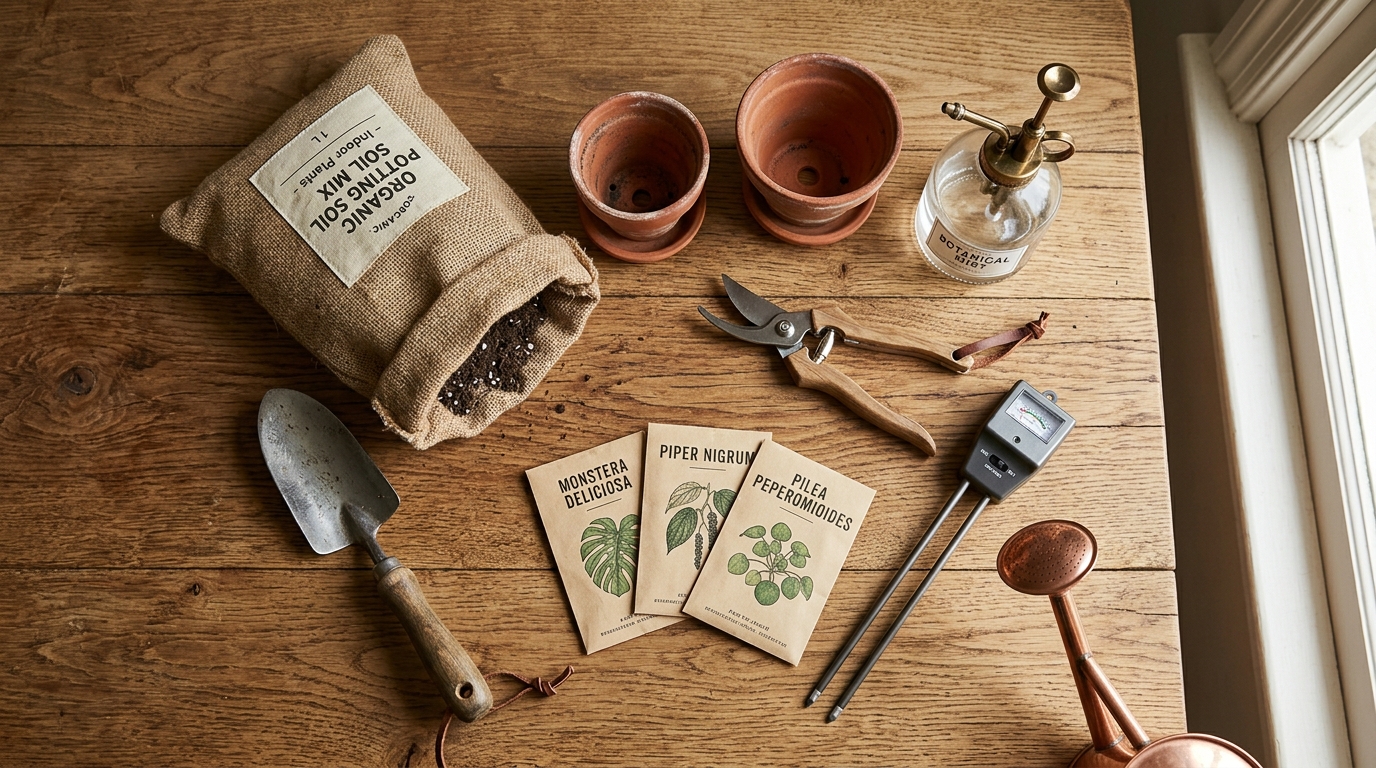
Indoor gardening fails for one of five reasons: not enough light, wrong watering pattern, wrong soil or no nutrients, wrong temperature/humidity, or wrong plant for the conditions. The good news is each failure is identifiable and fixable. This guide walks through the actual setup process — choosing a location, picking lights, picking soil vs hydroponic, watering routines, pH and nutrients — and the troubleshooting matrix for when things go wrong.
Step 1: Pick the location
Before buying anything, walk through your space and identify where plants can live. Factors:
- Natural light: South-facing windows = best (4-8 hours direct sun in winter, 6-12 in summer). East or west = okay (3-5 hours direct sun). North = inadequate for most edibles; needs supplemental lighting.
- Temperature: 65-75°F is the sweet spot for most herbs and leafy greens. Below 60°F or above 80°F, growth slows.
- Humidity: 40-60% works for most plants. Below 30% (winter heating) requires a humidifier or grouping plants together to share moisture.
- Access: Pick a spot you’ll walk by daily. Plants get forgotten when they’re hidden.
The most common mistake: putting plants in the prettiest spot rather than the spot with the best light. The plant doesn’t care about aesthetics; it cares about photons.
Step 2: Pick the lighting
Match the lighting to your goal:
| Product | Best for | Rating | Notes | |
|---|---|---|---|---|
| Sunny south window (no supplement) | herbs in summer; succulents year-round | ★★★★☆ | 4-8 hr direct sun. Free. | — |
| Sunny window + grow bulb in lamp | extending winter light for herbs | ★★★★☆ | $15-25 for a GE BR30 grow bulb. | Check price |
| Smart herb garden (AeroGarden Bounty) | turnkey light + container + watering | ★★★★☆ | $200-280. 9 pods. Integrated LED. | Check price |
| LED panel (Spider Farmer SF-1000) | serious growing for a 2x2 ft area | ★★★★★ | $120-150. Dimmable. 5-year warranty. | Check price |
| LED panel (Spider Farmer SF-2000) | serious growing for a 2x4 ft area | ★★★★★ | $220-280. Best balance for fruiting plants. | Check price |
The honest light formula: plants need 12-16 hours of light per day at adequate intensity. Adequate intensity for herbs and leafy greens = 200-400 PPFD. For fruiting plants = 600-900 PPFD. A grow light timer ($10-15) automates the on/off cycle so you don’t have to remember.
Step 3: Pick soil or hydroponic
The trade-offs:
Soil (terracotta pots, plastic pots, fabric grow bags + potting mix):
- Pros: lower upfront cost ($15-40 to start), more forgiving, traditional, learn how plants actually work
- Cons: slower growth, you have to manage watering and feeding manually
- Best for: beginners, single-plant focus, gardeners who enjoy the process
Hydroponic (smart garden, vertical tower, NFT, DWC, Kratky):
- Pros: 2-3× faster growth, more plants per square foot, automated watering
- Cons: higher upfront cost ($100-1,000), nutrient management required, pump dependency for active systems
- Best for: maximum production in small spaces, users who want automation
You can do both simultaneously — many indoor gardeners run a smart herb garden in the kitchen and soil-grown larger plants under a separate LED panel.
Step 4: Watering routine
This is where most indoor plants die.
For soil: Stick your finger 1-2 inches into the soil. If it’s dry, water. If it’s moist, wait. A $5-15 soil moisture meter eliminates the guesswork entirely. The metric is “moist 1-2 inches down” — not “moist on the surface” or “wet through the pot.”
For hydroponic: Top off the reservoir as plants drink it down. Change the full reservoir every 2-3 weeks because nutrient ratios drift over time. EC meter ($15-30) tells you when nutrients are exhausted.
The cardinal rule: empty drip trays after watering. Soil-grown plants sitting in standing water develop root rot within a week.
Step 5: pH and nutrients
For soil: most premixed potting soils contain enough nutrients for 4-6 weeks. After that, supplement with a balanced fertilizer (10-10-10 NPK, or 2-3-2 for herbs). Don’t overfeed — burned roots are worse than slow growth.
For hydroponic: you mix nutrients into water yourself. Three things matter:
- Nutrient solution. General Hydroponics Flora Series (3-part) is the most-documented home choice. Masterblend 4-18-38 is the budget alternative.
- pH. Hydroponic plants want water pH 5.5-6.5. Tap water often runs 7.0-8.0. Use a $15-50 pH meter and pH Down to adjust. Skipping this is the #1 cause of hydroponic failures.
- EC (electrical conductivity). Light feed: 0.8-1.2 EC. Standard: 1.5-2.0 EC. Heavy: 2.0-2.5 EC. EC meters at $15-30 are good enough for home use.
Step 6: Pick your first plants
Easy first plants (high success rate):
- Basil: vigorous, signals problems clearly (wilting = water; yellowing = nutrients)
- Lettuce: grows fast, low light tolerant, harvest leaf-by-leaf
- Mint: thrives in low light, hard to kill
- Parsley: slow but reliable
- Chives: nearly indestructible
Harder first plants (save for later):
- Cilantro (bolts quickly, hard to recover)
- Rosemary (woody, finicky about water)
- Tomatoes (require strong light + pollination indoors)
- Peppers (long growing cycle, light-hungry)
Troubleshooting matrix
When something looks wrong, work this in order:
| Product | Best for | Rating | Notes | |
|---|---|---|---|---|
| Stems are leggy/stretched, plants pale | Light too weak or too far away | — | Move grow light closer, increase hours, or upgrade to stronger panel. | — |
| Leaves yellowing from the bottom up | Nitrogen deficiency OR overwatering | — | Check soil moisture first; if moist, add balanced fertilizer. | — |
| Leaves wilting + soil dry | Under-watering | — | Water deeply, then return to normal schedule. | — |
| Leaves wilting + soil wet | Root rot / over-watering | — | Stop watering. Check drainage. Repot in dry soil if severe. | — |
| Brown leaf tips | Low humidity (most common) | — | Group plants together; add a humidifier if winter heating dries the air. | — |
| White/fuzzy growth on soil | Mold from overwatering + poor air flow | — | Reduce watering; add a clip-on fan for circulation. | — |
| Tiny flies around plants | Fungus gnats (from wet soil) | — | Let top inch of soil dry between waterings; sticky traps for adults. | — |
| Hydroponic plant not growing | pH out of range (most common) | — | Test pH; adjust to 5.5-6.5. Also check EC and water temp. | — |
Essential gear
The minimum kit beyond the plants themselves:
- Soil moisture meter ($5-15) — eliminates the “did I water” question
- Spray bottle / mister ($5-10) — humidity, foliar feeding
- Pruning shears ($10-15) — clean cuts beat tearing leaves
- Plant labels ($5-10) — what is that seedling?
- Watering can with narrow spout ($15-25) — precision over volume
If hydroponic, add: pH meter ($15-50), EC meter ($15-30), pH Down ($10-15), nutrient solution ($20-30).
If soil, add: bag of indoor potting mix ($8-15), balanced fertilizer ($10-20).
FAQ
Frequently asked questions
How long until I get my first harvest?
Why are my plants growing tall and falling over (leggy)?
How often do I really need to water?
Do I need to fertilize my indoor herbs?
My basil keeps bolting (flowering). How do I stop it?
Can I grow vegetables indoors year-round?
Bottom line
Light is 60% of success. Watering is 30%. The other 10% is nutrients, humidity, and plant choice. Get light right first; worry about everything else only after that’s solved.
Beginners: AeroGarden Bounty + pre-seeded herb pods. After 6-12 months of learning, upgrade to soil or hydroponic systems with separate grow lights.
Browse the deep dives: grow lights, hydroponic systems, smart herb gardens, or the pillar overview.