guides
How to Grow Oregano Indoors: Complete Growing Guide
Grow oregano indoors in bright sun or under grow lights with fast-draining soil and infrequent watering. Step-by-step guide for year-round fresh flavor.
 Priya Anand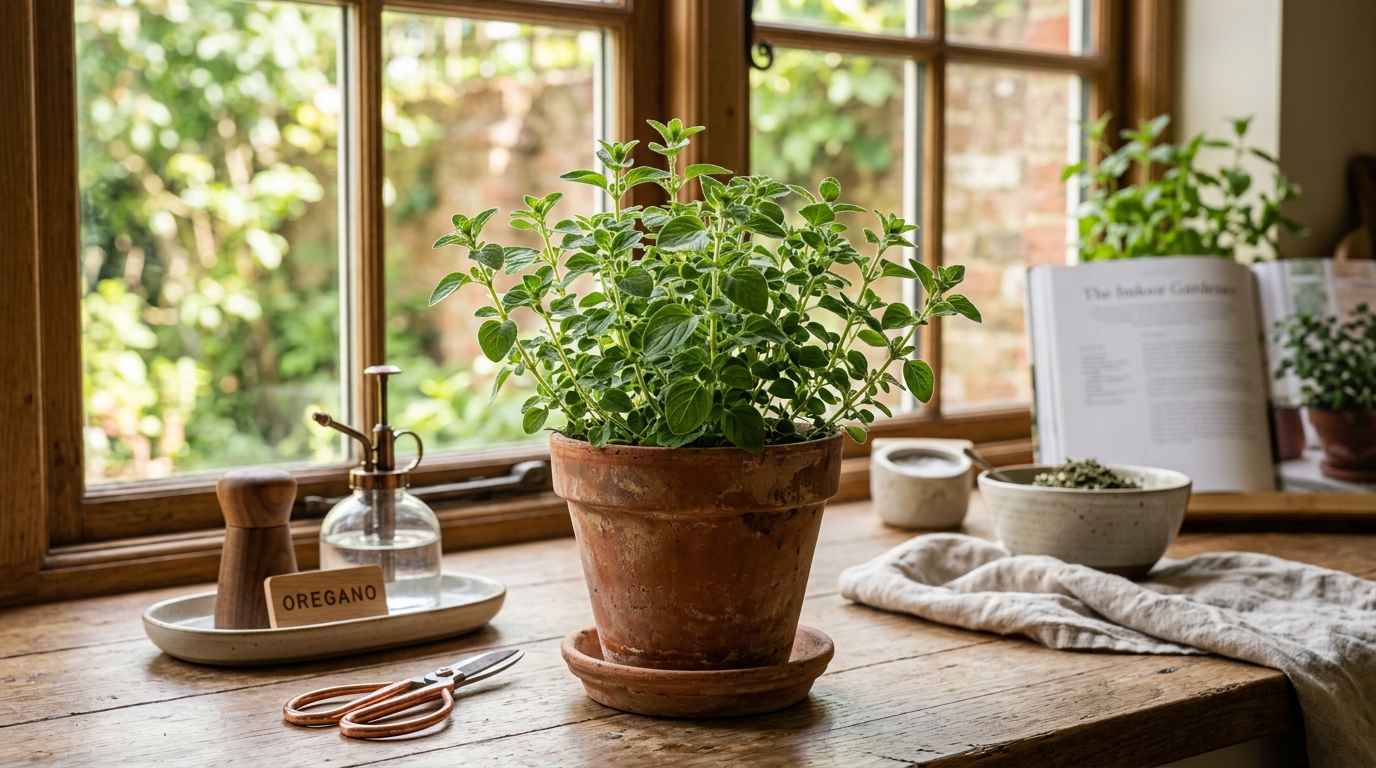
Oregano grows best indoors in a 6–8 inch pot with excellent drainage placed in the sunniest window you have — south-facing with 6 or more hours of direct sun — or under a grow light running 14–16 hours per day. It is drought-tolerant and thrives in lean, fast-draining soil; the most common indoor failure is overwatering, not underwatering. Greek oregano (Origanum vulgare subsp. hirtum) delivers the strongest, most pungent flavor for cooking.
Unlike fussy herbs such as cilantro that bolt within weeks, oregano is a perennial that grows for years. Once established, it becomes one of the lowest-maintenance indoor herbs you can keep. The key is replicating its native Mediterranean habitat: hot, sunny, low-humidity conditions with soil that dries between waterings. Get that right and oregano rewards you with a continuous supply of intensely aromatic leaves for pasta, pizza, soups, and grilled meats.
Is growing oregano indoors worth it?
Oregano is one of the best herbs for indoor growing from a long-term return perspective. Unlike annuals such as cilantro or basil that complete their life cycle in weeks, oregano is a perennial that grows for 3–5 years as a container plant. A single plant purchased for $3–5 from a garden center provides fresh leaves for years with minimal input.
The flavor argument is compelling. Grocery store dried oregano loses most of its volatile oils within 6 months of packing. Fresh oregano from a live plant is far more aromatic and complex. For pizza, pasta sauces, marinades, and braised meats, fresh-picked oregano offers a noticeably brighter, more floral bitterness than anything from a spice jar.
Oregano is also nearly indestructible once established. It tolerates occasional underwatering, survives dry indoor air, handles temperature swings from 60–85°F, and keeps growing through winter if given adequate light. For someone who wants a perpetual herb supply with minimal daily effort, oregano is the top candidate.
What you need to grow oregano indoors
| Product | Best for | Rating | Notes | |
|---|---|---|---|---|
| Terracotta pot 6-8 inch with drainage | Wicking away excess moisture to prevent root rot in oregano | ★★★★★ | Terracotta is ideal for oregano because it is porous and breathes — it actively pulls moisture out of the soil. A plastic pot works but requires even more careful watering restraint. Never use a pot without drainage holes. | Check price |
| Perlite for soil amendment | Creating the fast-draining soil oregano requires to avoid root rot | ★★★★★ | Mix 30-50% perlite into standard potting soil. Oregano native soils are rocky and almost mineral — the more drainage you can build in, the better. Coarse sand works as an alternative. | Check price |
| Greek oregano seeds or transplant | Getting the strongest, most aromatic oregano for cooking | ★★★★★ | Greek oregano (Origanum vulgare subsp. hirtum) is the correct culinary species. Common ornamental oregano sold at garden centers is often Origanum vulgare with negligible flavor. Check the botanical name on the label. | Check price |
| Full-spectrum LED grow light | Supplementing light in winter or in windows with fewer than 6 hours of sun | ★★★★★ | Oregano needs more light than most indoor herbs. Run a grow light 14-16 hours daily, positioned 4-6 inches above the canopy. Insufficient light is the primary reason indoor oregano loses flavor — the volatile oils that create aroma require strong light to develop. | Check price |
| Spray bottle for light misting | Watering seedlings without displacing seeds or compacting the soil surface | ★★★★★ | Useful during the germination phase only. Once oregano is 3-4 inches tall, water at soil level with a slow pour and avoid wetting the foliage. | Check price |
| Outlet timer for grow lights | Automating a consistent 14-16 hour light schedule without remembering to switch manually | ★★★★★ | A $10-15 mechanical or digital timer is the simplest tool for consistent growth. Oregano benefits from a stable light period; irregular schedules produce uneven, leggy growth. | Check price |
Step 1: Choose the right oregano variety
The oregano sold at grocery stores dried — and the herb used on Italian-American pizza — is Greek oregano (Origanum vulgare subsp. hirtum). This is the variety you want for culinary use. Many plants sold at garden centers and labeled simply “oregano” are common oregano (Origanum vulgare), which has large, pale leaves and mild flavor that is nearly tasteless by comparison.
Best indoor varieties:
- Greek oregano (Origanum vulgare subsp. hirtum) — small, densely hairy leaves with intense resinous flavor. The gold standard for cooking. Requires the most light but delivers by far the best flavor. This is what most people imagine when they think of oregano.
- Italian oregano (Origanum x majoricum) — a hybrid between Greek oregano and sweet marjoram. Slightly milder than Greek, with larger leaves and a sweeter note. Good for cooking and slightly more tolerant of lower light levels.
- Compacta or dwarf oregano — a compact cultivar that stays under 8 inches tall, ideal for small windowsill pots. Flavor is close to Greek oregano. A good choice for limited space.
- Marjoram (Origanum majorana) — often sold alongside oregano and closely related. Milder, sweeter, and more delicate. Excellent for light Mediterranean dishes but distinct from pizza-style oregano.
Avoid ornamental varieties like variegated or golden oregano (Origanum vulgare ‘Aureum’) for cooking — they are beautiful plants but have little culinary flavor.
Starting from seed vs. transplant:
Oregano can be started from seed, but germination is slow (14–21 days) and plants take 2–3 months to reach harvestable size. Buying a small transplant from a garden center, nursery, or hardware store herb section is significantly faster — you can harvest within 2–3 weeks of potting. For seeds, start indoors 6–8 weeks before you want to begin harvesting.
Step 2: Pot and soil setup
Oregano’s number-one enemy is wet soil. Root rot from overwatering or poor drainage kills more indoor oregano than any other cause. The setup you choose before planting determines how forgiving the plant will be.
Choosing the right pot:
- Use a terracotta pot 6–8 inches wide and at least 6 inches deep for a single transplant
- Terracotta is ideal because the porous walls allow the soil to breathe and dry evenly
- Avoid glazed ceramic or plastic if possible, as they hold moisture longer
- A pot with one large drainage hole is preferable to many small holes that can clog
- Do not use a saucer that holds water — empty it 30 minutes after watering or elevate the pot on feet so it never sits in standing water
Soil mix:
Standard potting soil straight from the bag holds too much moisture for oregano. Amend it generously:
- Mix 1 part standard potting mix with 1 part perlite (50/50 blend)
- Alternative: 2 parts potting soil + 1 part coarse sand + 1 part perlite
- If available, add a tablespoon of dolomitic lime per pot — oregano grows naturally in alkaline, calcium-rich rocky soils and performs better with a slightly raised pH
Planting:
Place a single piece of window screen or mesh over the drainage hole to prevent soil loss. Fill the pot, leaving 0.5 inch of headspace below the rim. For a transplant, remove from its nursery container, gently loosen the root ball, and plant at the same depth it was in the original pot. Water thoroughly once immediately after planting to settle the roots, then wait 7–10 days before the next watering.
Best for improving drainage in oregano and other Mediterranean herb containers
Hoffman 10404 Organic Perlite
Perlite is the most effective single addition you can make to any potting mix for oregano, lavender, thyme, or rosemary — herbs that evolved in rocky, mineral-rich soil. Hoffman's perlite mixes cleanly into potting soil without clumping, improves drainage immediately, and does not compress over time. A 2-quart bag is enough to amend 4-6 herb pots and costs under $10. If you have killed oregano before and suspect root rot, adding perlite to your next planting is the single most likely fix.
★★★★★ 4.7 · 9,800 reviews
Check current price on Amazon→Step 3: Provide the right light conditions
Light is the critical variable for indoor oregano flavor. The aromatic volatile oils — thymol, carvacrol, and related compounds — that give oregano its characteristic pungency are produced in higher concentrations under intense light. An oregano plant in a dim corner or a north-facing window produces large, pale, nearly flavorless leaves. The same plant in a south-facing window or under a full-spectrum grow light produces small, intensely aromatic leaves with the flavor you expect.
Window placement:
A south-facing window is the best indoor location for oregano in the Northern Hemisphere, providing 6–8+ hours of direct sun daily in spring and summer. East-facing windows (morning sun only) and west-facing windows (afternoon sun) can work if they provide at least 5–6 hours of direct light. North-facing windows do not provide adequate light for culinary-quality oregano.
In summer, a south-facing window in a hot climate may generate intense heat that stresses the plant. Keep oregano at least 12 inches from the glass surface to avoid leaf scorch and maintain airflow.
Using a grow light:
From October through March in most of North America, even a south-facing window may not provide enough light for strong flavor development. A grow light is the most reliable solution.
- Run the light for 14–16 hours per day (oregano needs more than most herbs)
- Position the light 4–6 inches above the canopy for adequate intensity
- A full-spectrum LED panel or a T5 grow light strip both work well
The flavor test: crush a leaf between your fingers. If it smells strongly of oregano immediately, light is adequate. If the scent is faint or grassy, increase light intensity or duration.
Step 4: Water oregano correctly
Oregano is the easiest herb to kill with kindness. Its Mediterranean origins mean it evolved in thin, rocky soils with dry summers and rainfall concentrated in winter — conditions that most indoor herb growers dramatically overestimate when caring for plants.
The core rule: Water only when the top 2 inches of soil are completely dry to the touch. Probe with a finger — the soil should feel dry and powdery at the 2-inch depth, not cool and barely moist. This typically means watering every 7–10 days in summer and as infrequently as every 14 days in winter.
How to water:
Water slowly and thoroughly, allowing water to run from the drainage holes. Then wait — do not water again until the soil passes the finger test. Empty saucers immediately after watering so the pot never sits in standing water.
Signs of overwatering:
- Yellowing lower leaves that drop with a slight tug
- Blackening or mushy stems at the soil line
- Soil that smells sour or earthy even when dry on the surface
- Soft, collapsing stems rather than firm, upright growth
Signs of underwatering:
- Wilting or drooping leaves that recover within 30–60 minutes after watering
- Dry, pale leaf color
- Crispy leaf tips without yellowing
Between the two, brief underwatering is far less damaging than consistent overwatering. Oregano can recover from wilting within hours; root rot from wet soil is often fatal.
Step 5: Fertilize sparingly
Oregano grown in rich, heavily fertilized soil produces large, lush leaves with reduced aromatic oil concentration. This is the same effect seen in over-fertilized grocery store herbs. The plant channels energy into vegetative growth rather than the resinous compounds that create flavor.
Feed lightly: apply a diluted liquid fertilizer (half or quarter strength) once per month during the active growing season (spring through early fall). A balanced liquid fertilizer (such as 10-10-10) or a formula specifically for herbs works well. Do not fertilize in winter when growth slows.
Alternatively, top-dress the pot with a small amount of worm castings at repotting time — this provides a slow, gentle nutrient release without the flush of growth that liquid fertilizers can trigger.
Fresh potting mix contains enough nutrients for the first 3–4 months without any supplemental feeding. Fertilizing newly potted oregano rarely improves growth and sometimes makes it worse.
Step 6: Harvest oregano properly
Regular harvesting is the most important maintenance practice for indoor oregano. It keeps the plant compact, promotes branching, and delays or prevents flowering — once oregano flowers, the leaves lose significant flavor as the plant channels energy into seed production.
How to harvest:
Cut stems 3–4 inches from the soil using clean scissors or garden shears. Always cut just above a leaf node (the point where leaves branch off the stem) — the plant regenerates from these nodes rather than from bare stems. Taking stems to 3–4 inches from the base removes 50–70% of the stem length, which sounds aggressive but stimulates compact, bushy regrowth.
How often:
Harvest every 2–3 weeks during active growth. You do not need to wait until the plant is large before harvesting — taking the top one-third of stems when the plant is 6–8 inches tall encourages branching and produces a fuller, more productive plant than letting it grow tall and leggy.
Pinch flowers immediately:
When flower buds appear — small clusters of tiny buds at stem tips that look different from regular leaf growth — pinch or cut them off immediately. Allowing oregano to flower significantly reduces leaf flavor and signals the plant to shift out of vegetative mode. If you stay ahead of the flowers, the plant remains productive for years.
Storage:
Fresh-cut oregano keeps for 1–2 weeks in the refrigerator wrapped in a damp paper towel inside a sealed bag. To dry it: bundle 5–10 stems with a rubber band and hang them upside down in a warm, dry, well-ventilated room for 1–2 weeks. Dried home-grown oregano retains far more volatile oils than commercial dried oregano because it is dried quickly at optimal temperature rather than stored for months before use.
Best for harvesting oregano and other woody-stemmed herbs without crushing or bruising stems
Fiskars Micro-Tip Pruning Snips for Herbs
Oregano stems are woodier and tougher than soft herbs like basil or mint, and standard kitchen scissors often crush rather than cut them cleanly. Micro-tip pruning snips slice through stems at the exact node without tearing, which reduces healing time and disease entry points. The spring-loaded action makes repetitive harvesting comfortable and the compact size fits into tight spots between stems. A single pair lasts years and serves all indoor herb work. Well worth the $12-15 investment for anyone with multiple herb pots.
★★★★★ 4.8 · 28,500 reviews
Check current price on Amazon→Step 7: Manage dormancy and repotting
Oregano grows actively from spring through early fall and naturally slows in winter, even indoors. Understanding this seasonal rhythm helps you manage the plant well over its 3–5 year indoor lifespan.
Winter management:
Reduce watering in winter to every 12–14 days. Do not fertilize. If using a grow light, maintain the 14–16 hour schedule to keep the plant from going fully dormant. Some dieback of lower stems is normal in winter — prune these back in early spring when new growth resumes. The plant will regenerate strongly from its woody base.
Repotting:
Repot when roots visibly emerge from the drainage hole or when the plant becomes top-heavy and tilts. Move up only one pot size (a 6-inch plant goes to an 8-inch pot, not a 12-inch one). Too much extra soil holds water that stays wet at the root zone. Repot in spring when growth is resuming — not in winter when the plant is slow and cannot recover from root disturbance quickly.
Troubleshooting common indoor oregano problems
Pale, flavorless leaves — almost always a light problem. Move to the brightest window available or add a grow light. Check that the grow light is positioned close enough (4–6 inches) and running long enough (14–16 hours). Fertilizer will not compensate for inadequate light; flavor comes from light, not nutrients.
Yellowing lower leaves dropping — usually overwatering or root rot. Let the top 2 inches of soil dry completely before watering again. Check drainage holes are not blocked. If the stems at soil level feel mushy or black, root rot has set in. If caught early, cut off damaged roots and replant in fresh, very dry soil mix with added perlite.
Leggy, thin stems falling over — insufficient light combined with warm temperatures. The plant grows fast and tall in low light, searching for more intensity, producing weak stems that cannot support leaves. Increase light dramatically — a grow light positioned 4–6 inches above the canopy solves this.
Powdery white coating on leaves — powdery mildew, a fungal disease favored by poor airflow and high humidity. Oregano dislikes humid conditions. Improve air circulation with a small fan, reduce humidity, and remove affected leaves. A diluted neem oil spray applied weekly helps control mild outbreaks: view on Amazon.
Aphids or spider mites on new growth — spray forcefully with water to dislodge pests. Apply neem oil solution to the undersides of leaves. Increase airflow; spider mites thrive in hot, dry, still air.
Plant dying back completely in winter — normal semi-dormancy for some plants. Do not throw it away. Cut stems back to 2–3 inches from the base, reduce watering, and maintain a grow light schedule. New growth typically resumes in February or March from the woody base.
FAQ
Frequently asked questions
Does oregano need full sun indoors?
How often should I water oregano indoors?
Why does my indoor oregano have no flavor?
Can I grow oregano indoors year-round?
What is the difference between Greek and Italian oregano for cooking?
How do I harvest oregano without killing the plant?
Can I start oregano from cuttings?
Bottom line
Growing oregano indoors successfully requires three conditions: intense light (south-facing window or 14–16 hours under a grow light), fast-draining soil (50% potting mix, 50% perlite), and restrained watering (every 7–10 days, only when the top 2 inches are dry). Nail those three and oregano becomes one of the most rewarding and self-sufficient plants you can keep indoors — a perennial herb that provides years of harvests with minimal attention.
Start with a small Greek oregano transplant in a terracotta pot. Pinch flower buds as soon as they appear. Harvest every 2–3 weeks by cutting stems back to 3–4 inches from the base, and the plant will reward you with dense, flavorful new growth indefinitely. The fresh leaves you pick are noticeably more aromatic and complex than dried grocery store oregano, and the plant’s multi-year lifespan means the investment pays off quickly.
For more indoor herb growing: how to grow herbs indoors for the full range of culinary herbs, herbs for indoor garden for which herbs suit different conditions, how to grow mint indoors for another easy perennial herb, and best grow lights for grow light recommendations when windowsill sun is not enough.