roundups
Best Living Wall Planters for Indoors
Our picks for the best indoor living wall planters in 2026: fabric pockets, modular panels, and premium hydroponic systems for green walls.
 Priya Anand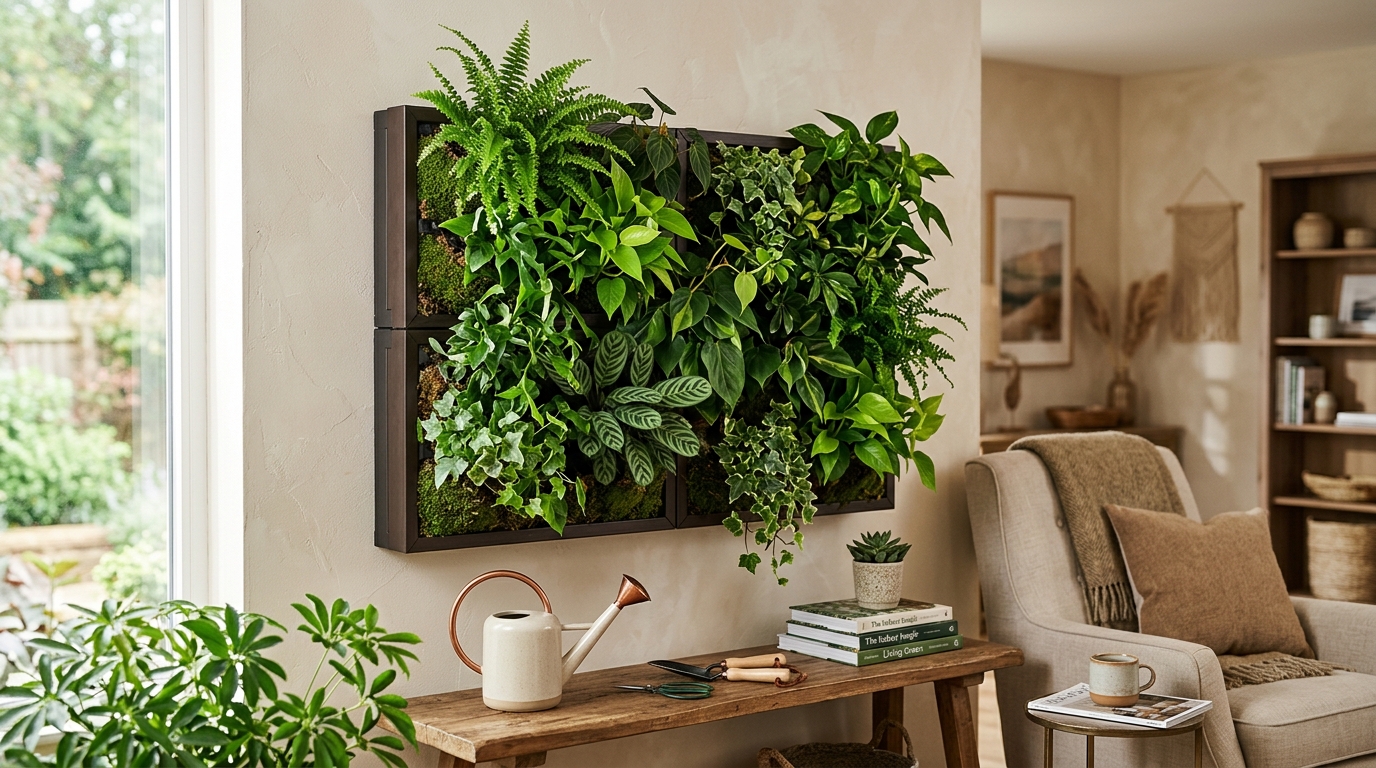
The best indoor living wall planters are Woolly Pocket Wally (top all-rounder for fabric pocket systems), Lechuza Cararo (best premium self-watering wall planter), and Minigarden Vertical (best modular expandable option). Living walls transform blank vertical space into productive green surface — but the wrong system saturates drywall, kills plants, or collapses under wet weight. This guide covers what actually works.
What makes a good indoor living wall planter?
Three factors separate systems that thrive from systems that destroy walls:
- Moisture barrier: Any wall planter must prevent water from migrating to drywall. Quality fabric systems have a woven moisture barrier on the back face; rigid systems need a sealed tray or drainage channel.
- Drainage path: Plants need drainage; walls do not. Either a collection tray at the base or a closed-loop irrigation system routes excess water safely.
- Weight rating: Soil-filled pockets weigh 3–8 pounds each when wet. Multiply that by pocket count and verify that your wall anchors and studs can support the full load before mounting.
Quick comparison
| Product | Best for | Rating | Notes | |
|---|---|---|---|---|
| Woolly Pocket Wally 3-Pocket | best fabric pocket planter; built-in wall-safe moisture barrier | ★★★★★ | $35-60. Recycled-bottle felt. Breathable and moisture-barrier backed. Best for herbs and trailing plants. | Check price |
| Lechuza Cararo Wall Planter | best premium hydroponic; drip-free sub-irrigation system | ★★★★★ | $120-200. German-made. Integrated sub-irrigation. Removable plant cartridge. | Check price |
| Minigarden Vertical Module | best modular system; expands to any wall size | ★★★★★ | $45-80 per module. Italian design. Snap-together panels. Built-in drip channel. | Check price |
| Florafelt Pocket Panel | best large installation; commercial-grade durability | ★★★★★ | $80-160. Drip irrigation compatible. UV-stable felt. Holds 12-24 plants per panel. | Check price |
| MKONO Felt Wall Pockets | best budget; entry-level accent wall greenery | ★★★★☆ | $20-35. Thin felt. No built-in moisture barrier. Line with plastic for wall protection. | Check price |
The picks
Best fabric pocket system: Woolly Pocket Wally
Best for first-time living wall builders; herb growers; renters who want removable green walls
Woolly Pocket Wally 3-Pocket Living Wall Planter
Woolly Pocket makes the most wall-safe fabric pocket system available. Each Wally is sewn from recycled-bottle felt with an integrated moisture barrier on the back face — that barrier is the critical difference between Woolly Pocket and cheap Amazon felt pockets that saturate drywall within a season. The 3-pocket configuration holds three 4–6 inch plants per section; stack multiple Wallys vertically for full wall coverage. 35–60 dollars per unit. The felt breathes, preventing root rot. Best plants: herbs (basil, mint, parsley), ferns, pothos, and philodendron. Hangs on standard picture hooks; light enough for drywall anchors at normal wet weight.
★★★★★ 4.7 · 2,800 reviews
Check current price on Amazon→Pros
- Integrated moisture barrier prevents wall water damage — the most important feature in this category
- Recycled-bottle felt breathes to prevent root rot and mold buildup
- Removable: takes down without permanent wall modification — ideal for renters
- Works with standard picture hooks or screws; no special hardware required
- Multiple configurations available: 1-pocket compact to 9-pocket large panels
Cons
- Felt stays damp after watering; needs good airflow to dry between sessions
- No integrated drip control — water can drip from the bottom pocket if you overwater
- Pocket depth of roughly 4 inches limits plant variety; not for deep-rooted species
- Each pocket must be watered individually; no shared irrigation across pockets
Best premium system: Lechuza Cararo
Best for design-conscious buyers who want living walls without visible watering mess; home offices and upscale living rooms
Lechuza Cararo Self-Watering Wall Planter
Lechuza Cararo is the premium answer to indoor living walls. It uses Lechuza's patented sub-irrigation system in a wall-mounted configuration: fill the reservoir via the top port; plants draw water through a wicking insert over 2–4 weeks. The plant cartridge slides out for easy replacement without removing the wall mount. 120–200 dollars depending on size. No drip, no puddles, no daily watering. The injection-molded UV-stable housing has a clean architectural finish that integrates into modern interiors. The trade-off: fewer total plants than a multi-pocket system, but the plants it holds look exceptional and receive consistent moisture without intervention.
★★★★★ 4.8 · 1,100 reviews
Check current price on Amazon→Pros
- Sub-irrigation means no dripping water on walls or floors during watering
- Water-level indicator shows when to refill — removes all guesswork
- Removable plant cartridge allows replanting without dismounting the wall bracket
- Premium housing integrates into modern interiors and does not look utilitarian
- Reservoir holds 2-4 weeks of water depending on plant size and conditions
Cons
- 120-200 dollars per unit is a significant cost for limited plant capacity
- Holds 1-4 plants per unit; need multiple units for a full living wall display
- Sub-irrigation keeps soil consistently moist — succulents and cacti will rot
- Replacement wick inserts must be sourced from Lechuza directly
Best modular system: Minigarden Vertical
Best for users who want to scale a living wall gradually; herb and edible growers; balcony-to-indoor installs
Minigarden Vertical Module Wall Planter
Minigarden Vertical is an Italian-designed modular living wall system with interlocking panels that snap together horizontally and vertically without tools. Each module holds 6 plant slots with deep root pockets (5–6 inches) that support herbs, lettuce, and small edibles. The built-in drip management channel routes water from the top module downward, exiting at the bottom into a collection tray. 45–80 dollars per module. Start with one module (6 plants) and expand as confidence builds. The snap-fit design allows modules to be rearranged or detached as your wall planting evolves — no commitment to a fixed layout.
★★★★★ 4.5 · 1,600 reviews
Check current price on Amazon→Pros
- Modular: start with one section and expand to any wall size without a new system
- Built-in water channel routes drip between modules and prevents wall damage
- Deeper root pockets (5-6 inches) support herbs, lettuce, and small edibles
- Snap-fit assembly requires no tools and installs in 10-15 minutes
- UV-stable polypropylene holds up under grow lights without yellowing over time
Cons
- Bottom collection tray must be emptied regularly in high-watering setups
- Modules feel lightweight; wall anchors into studs are essential for full wet loads
- Plant pocket size is fixed and not adjustable for larger root systems
- Some color options fade under direct sun; use in diffused light for best longevity
Best for large installations: Florafelt Pocket Panel
Best for interior designers; homeowners planning statement walls; installations with drip irrigation
Florafelt Pocket Panel Living Wall System
Florafelt makes the pocket panel system used in commercial living walls across offices, hotels, and restaurants. Each panel holds 12 to 24 plant pockets in a grid layout and accepts standard drip irrigation tubing for automated watering. The felt is UV-stabilized and antimicrobial. 80–160 dollars per panel. One or two panels create a dramatic statement wall in a home. For serious installations, stack panels vertically with a shared drip line and a sump-pump recirculation system for completely automated care. The trade-off vs consumer systems: setup complexity is higher and irrigation planning adds cost and time.
★★★★★ 4.6 · 820 reviews
Check current price on Amazon→Pros
- Commercial-grade felt rated for years of continuous moisture without degradation
- Compatible with standard drip irrigation fittings — automate watering with a timer and pump
- Panels mount flush against wall with a complete back moisture barrier
- Highest plant density in this roundup: 12-24 plants per panel
- Uniform grid layout produces a professional, designed living wall appearance
Cons
- Higher setup complexity: drip irrigation planning required for best results
- 80-160 dollars per panel adds up quickly when covering large wall areas
- Not self-watering — needs a drip system or careful manual watering to avoid runoff
- Heavier than consumer fabric systems; robust stud anchors required for multi-panel installs
Best budget option: MKONO Felt Wall Pockets
Best for budget-conscious beginners; temporary or rented spaces; small accent walls with minimal watering
MKONO Felt Wall Planter Pockets
MKONO wall pockets are the entry point for living wall aesthetics without serious investment. 20–35 dollars for a panel of 6–12 pockets in a felt and canvas backing. The trade-off vs Woolly Pocket is real: the felt is thinner (no integrated moisture barrier), root depth is shallower, and the system degrades faster under continuous moisture. For best results, line each pocket with a cut piece of plastic sheeting before planting to create a DIY moisture barrier. Best plants: succulents (water infrequently), air plants (no soil needed), and small trailing plants like string of pearls or devil's ivy.
★★★★☆ 4.3 · 6,400 reviews
Check current price on Amazon→Pros
- 20-35 dollars is the lowest entry cost in the living wall category
- Lightweight: hangs on two nails or picture hooks on virtually any wall
- Available in many sizes and pocket counts for flexible layout options
- Works well for succulents and air plants where watering is minimal
- Good temporary solution for renters or seasonal greenery displays
Cons
- No built-in moisture barrier: drywall damage is a real risk without a plastic liner modification
- Thin felt degrades within 1-2 years under regular watering conditions
- Shallow pockets limit plant variety and root depth significantly
- No drainage management: overwatering causes immediate drip on walls and floors
Best plants for indoor living walls
Not every plant thrives in a wall planter. The best candidates tolerate restricted root space, handle varying moisture between waterings, and look good year-round indoors:
- Pothos (Epipremnum aureum): the single most forgiving living wall plant. Trails beautifully, tolerates low light, and forgives irregular watering schedules.
- Ferns (bird’s nest, maidenhair, boston): high-humidity lovers that thrive in moist felt pockets; require indirect light.
- Philodendron heartleaf: close to pothos in forgiving nature; handles lower light than most trailing varieties.
- Herbs (basil, mint, parsley, thyme): productive and fragrant; require grow lights or a bright south-facing window. Replace seasonally as they bolt.
- Succulents (echeveria, haworthia): only suitable for fabric pockets with minimal watering; never pair with sub-irrigation systems.
- Air plants (Tillandsia): hang in open pockets without soil; mist twice weekly. Zero drainage concerns.
Avoid deep-rooted plants (tomatoes, peppers, large tropicals) — pocket depth caps healthy root development for these species.
How to hang a living wall planter safely
- Locate wall studs: use a stud finder before drilling. For heavy systems (Florafelt panels, multiple Minigarden modules), anchor screws into studs, not just drywall.
- Add a waterproof backing: run a strip of sheet plastic behind the planter footprint before mounting, even on systems with claimed moisture barriers. Long-term moisture against drywall is expensive to repair.
- Place a drip tray below: set a shallow tray or absorbent mat on the floor directly below the planter for the first several waterings to assess runoff before committing to a permanent install.
- Calculate wet weight before hanging: fill one pocket with wet soil and weigh it, then multiply by total pocket count. A 12-pocket system can reach 40–80 pounds when fully watered. Verify anchor ratings match.
- Test with one section first: before mounting a full wall, hang one module or panel for four weeks to assess drip patterns, plant health, and actual watering frequency in your specific light and humidity conditions.
What to skip
- Cheap felt pockets without moisture barriers on drywall. Budget Amazon sets cause hidden wall damage within a season. Either use Woolly Pocket or add a plastic liner to any bare felt system.
- Succulents in sub-irrigation systems. Lechuza Cararo and hydroponic wall planters maintain consistent soil moisture — succulents rot in these conditions. Use succulents only in fabric pockets with infrequent watering.
- Large installations without drip irrigation. Manually watering 20 or more pockets consistently is tedious and error-prone. Any installation larger than 12 pockets warrants an automated drip timer.
- Heavy standard potting soil in wall planters. Regular potting mix is too dense for vertical use — it compacts, restricts drainage, and adds unnecessary weight. Use a lightweight mix of perlite, coco coir, and a small amount of potting soil.
- Living walls in low-humidity rooms without a plan for supplemental watering. Felt dries rapidly in heated winter rooms or dry climates. Expect increased watering frequency and stressed ferns without attention to ambient humidity.
FAQ
Frequently asked questions
Do indoor living wall planters damage walls?
What is the easiest living wall planter to maintain?
Can you grow herbs in an indoor living wall planter?
How much does an indoor living wall cost to set up?
What soil mix should I use in wall planters?
Woolly Pocket vs Minigarden Vertical — which should I buy?
Bottom line
Best all-around: Woolly Pocket Wally. Best premium: Lechuza Cararo. Best modular: Minigarden Vertical. Best for large walls: Florafelt Pocket Panel. Best budget: MKONO Felt Pockets.
Every living wall system needs a moisture barrier, anchors rated for full wet weight, and plants matched to how the system delivers water. Start with one section, observe drip and plant health for a month, then scale from there.
For more indoor growing: best indoor planters, vertical vs shelf garden, best tower garden systems, best grow lights, best indoor herb gardens.